Uganda Destinations
Uganda is the greenest, most biodiverse corner of East Africa, the one country where you can track mountain gorillas, sit with wild chimpanzees, and watch lions on the savannah in a single trip. Winston Churchill called it the "Pearl of Africa," and the name has stuck for good reason.
Its famous for gorilla trekking in Bwindi Impenetrable Forest, home to almost half the world's remaining mountain gorillas, and at a lower permit price than neighbouring Rwanda.
But Uganda rewards travellers who stay longer. Queen Elizabeth National Park has tree-climbing lions and boat cruises along the Kazinga Channel, Kibale Forest is East Africa's chimpanzee capital, and Murchison Falls forces the entire Nile through a gap barely seven metres wide before it spills into big-game country.
Add the source of the Nile at Jinja, the calm of Lake Bunyonyi, and the Rwenzori "Mountains of the Moon," and Uganda stands among Africa's most complete and most underrated safari destinations.
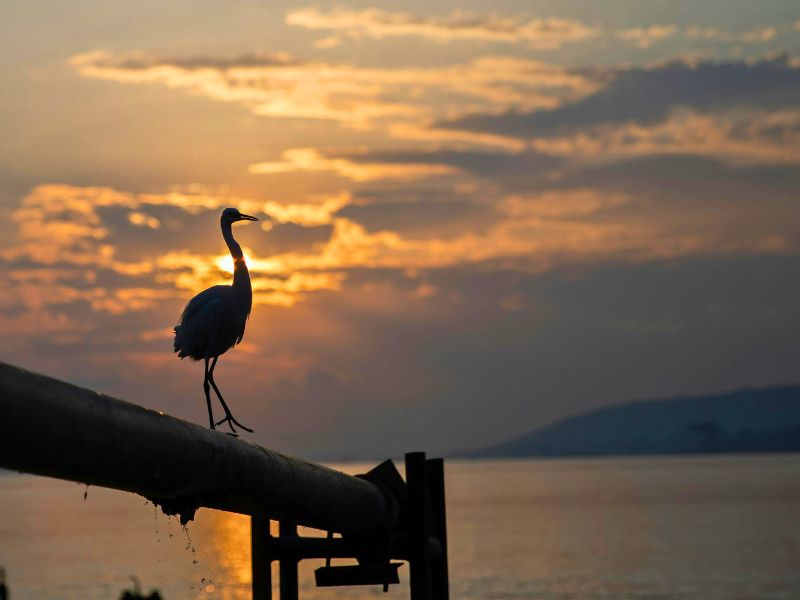
Jinja
Jinja is Located on the Eastern part of Uganda, about 2 hours, 30 minutes-drive from Kampala City.
Activities – white water rafting, kayaking and fishing
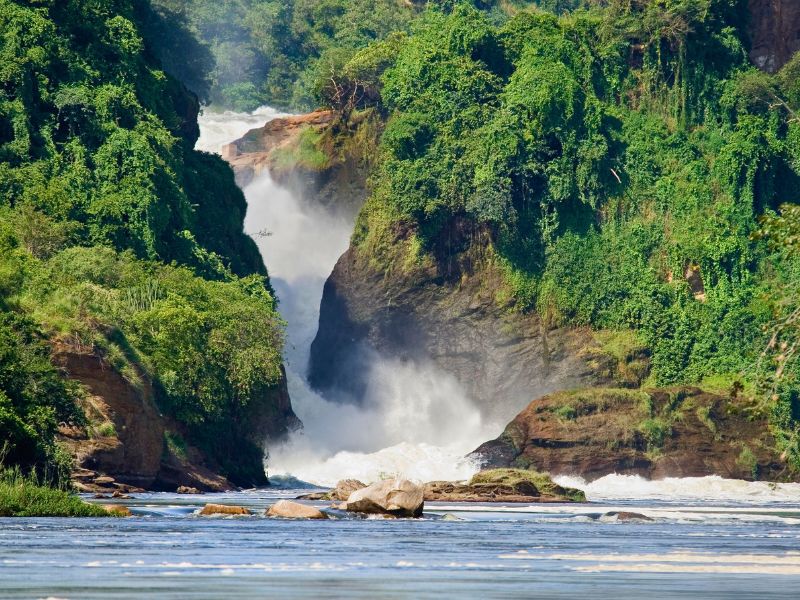
Murchison Falls
Location – North-Eastern region of Uganda, approximately 5 hours from Kampala
Activities – Game drives, boat riding, birding, hiking and balloon ride
What to see – Lions, elephants, hippos, crocodiles, waterbuck, Rothschild giraffe, leopard, buffalo and many bird species.
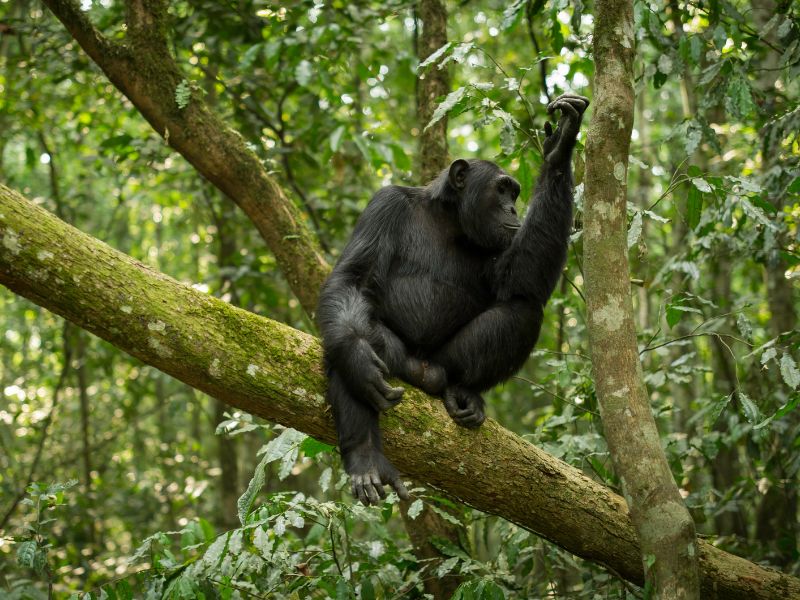
Kibale National Park
Kibale is located in Western region of Uganda, approximately 5 hours from Kampala. It is characterized by rainforest.
Activities – Chimp tracking, chimpanzee habituation, guided nature walks, bird watching and cultural tour.
What to see – Chimpanzees, monkeys; red colobus, black and white colobus, red-tailed monkey, blue monkey, grey-cheeked mangabay, pottos, I’hoests monkey, bush babies and olive baboons. The fores hosts over 300 bird species making it good for birding.
Queen Elizabeth National Park
Located in western Uganda, Queen is the second largest park in Uganda and characterized by savannah plains, shrubs and small lakes.
It can be accessed by flight from Entebbe and by road which is approximately 6-7 hours from Kampala.
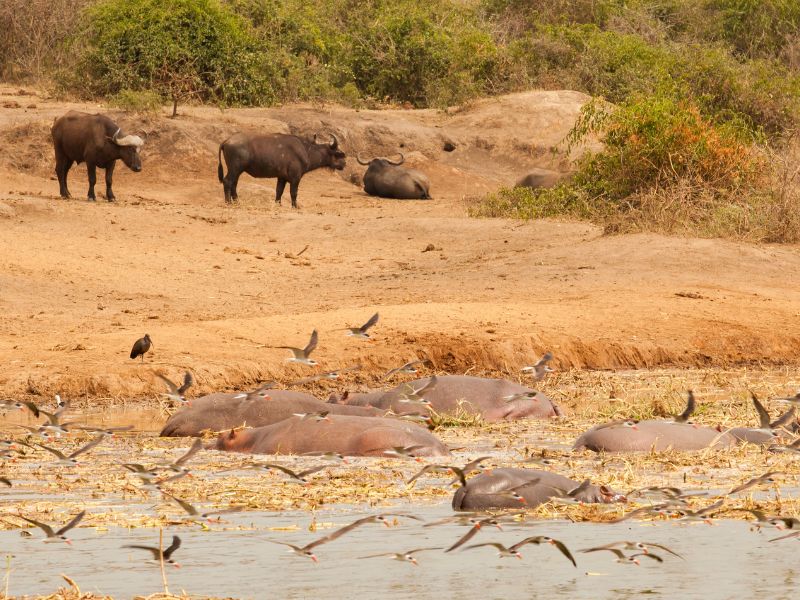
What to see – tree climbing lions, elephants, Uganda kobs, leopards, topi, bushbucks, warthogs, vervet monkeys, black and white monkeys. It hosts over 600 bird species.
Activities – game viewing, lion tracking, boat cruise in Kazinga channel, guided nature walk and bird watching.
Ishasha
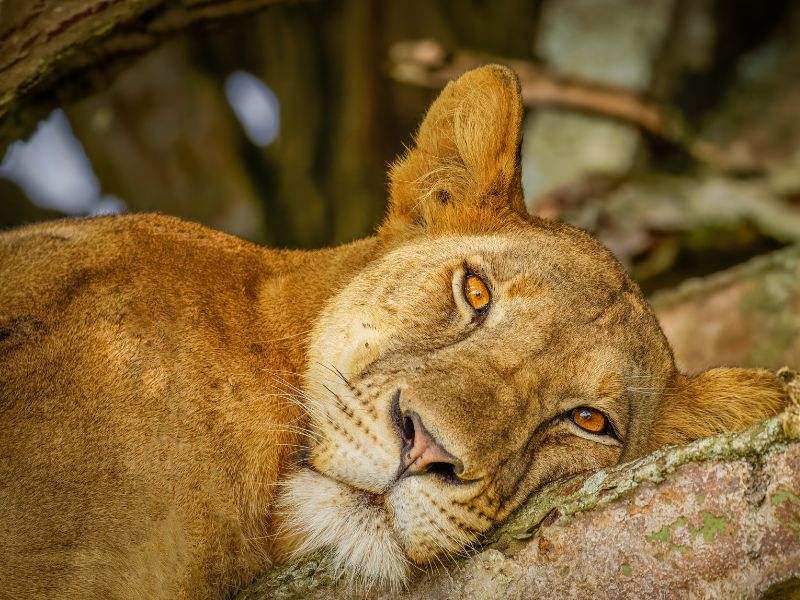
Ishasha is an extension of Queen Elizabeth National Park and located on the Southern part of the park and it is less crowded. It is common for tree-climbing lions.
It is characterized by savannah woodlands, majorly candelabra trees where lions hang because of its big branches. Other trees found here are cactus, fig tree, acacia and many others.
Other wildlife which can be seen here include leopards, elephants, antelopes and Uganda kobs.
Bwindi Impenetrable Forest
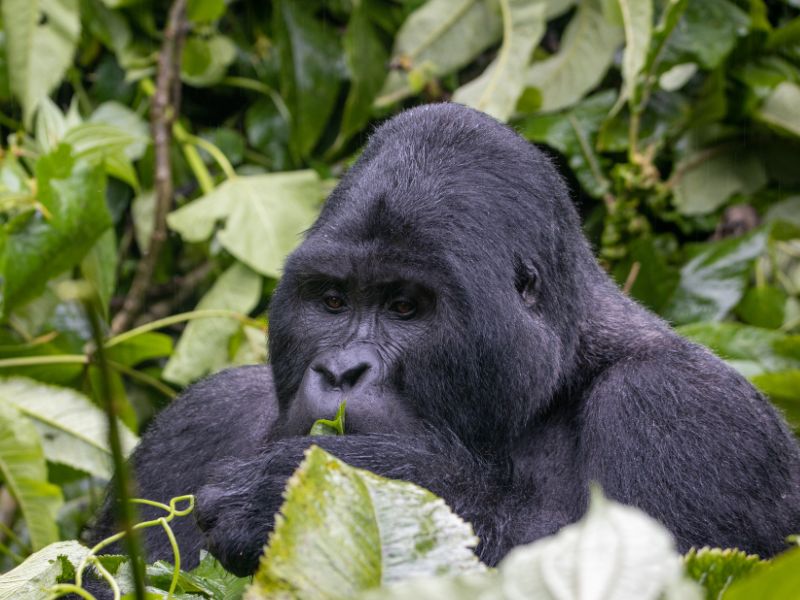
Located in southwest Uganda, Bwindi Impenetrable National Park is home to roughly half of the world’s mountain gorilla population. As one of Uganda’s most popular destinations, this Unesco World Heritage Site offers the unique opportunity to track gorillas on a guided trek through the dense forest below. In addition to providing visitors with the chance to interact with amazing mountain gorillas, Bwindi also hosts other primate species, including chimpanzees and several types of monkeys (including colobus monkeys).
Lake Bunyonyi
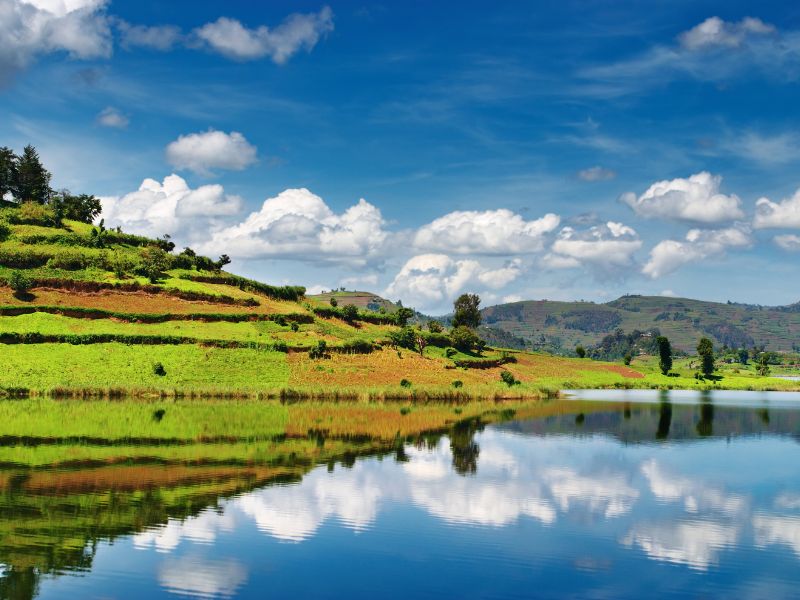
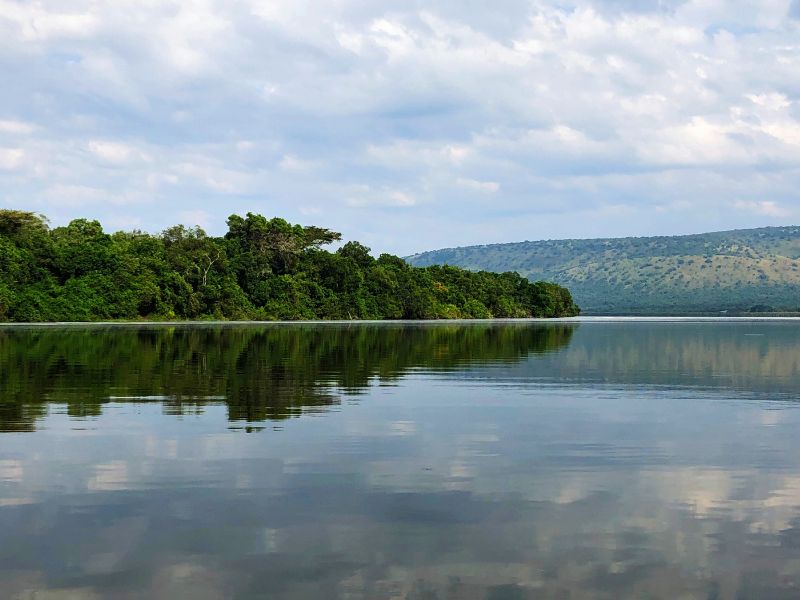
Lake Bunyonyi is the second deepest lake in Africa with a maximum depth of over 900 meters. The name punyonyi means ‘place of many little birds’, and it’s true there are usually at least 20 species of birds around the place and a few hundred grey crowned cranes, red-chested swallows, black and white casqued eared oribis, porcupines and squirrels.
Lake Mburo
Lake Mburo is the smallest national park in Uganda and the closest park to both Kampala and Entebbe (3-4 hours’ drive from Kampala). The park protects a wetland system encompassing five lakes as well as a diverse range of habitats. The most common wildlife attraction are; antelopes, leopards, hyenas, hippos, zebras, elands, and impalas. There are 350 bird species including the white winged warbler, black-rumped buttonquail, papyrus gonolek, Carruther’s Cisticola and the rare shoebill.
Uganda Travel FAQs: Planning Your Trip
What are the top places to visit in Uganda?
Uganda's headline destinations are Bwindi Impenetrable Forest (mountain gorillas in the southwest), Queen Elizabeth National Park (tree-climbing lions and the Kazinga Channel), Kibale Forest (chimpanzees), and Murchison Falls (the Nile and big game in the north). Add Jinja at the source of the Nile, the calm of Lake Bunyonyi, and the Rwenzori Mountains, and you have one of Africa's most varied itineraries in a single country.
What is Uganda best known for?
Uganda is the "Pearl of Africa," and it's best known as the one country where you can track mountain gorillas, sit with wild chimpanzees, and watch lions on the savannah in the same trip.
It holds almost half the world's remaining mountain gorillas in Bwindi, and it's the greenest, most biodiverse corner of East Africa. The source of the White Nile at Jinja adds a very different kind of highlight.
Where can you see gorillas in Uganda, and how much does it cost?
Mountain gorilla trekking happens in Bwindi Impenetrable National Park and, less often, Mgahinga Gorilla National Park.
The permit is US$800 per person in high season, dropping to US$600 in the low-season months of April, May, and November, notably cheaper than Rwanda's US$1,500. A longer four-hour gorilla habituation experience is US$1,500.
Permits are limited and must be paid in full to secure, so book well ahead.
When is the best time to visit Uganda?
The dry seasons, roughly June to September and December to February, make forest trails and park roads easier, and are the most reliable for gorilla and chimp trekking.
That said, Uganda is a year-round destination, and the wetter months of April, May, and November bring discounted gorilla permits and far fewer visitors.
Birdlife is exceptional throughout.
How many days do you need in Uganda?
Three days is the minimum for a gorilla trek with travel either side. To pair gorillas with chimpanzees in Kibale and a savannah safari in Queen Elizabeth, plan on 7 to 10 days.
Uganda's distances are longer than Rwanda's and the roads slower, so it pays not to over-pack the itinerary, a light internal flight or two can save a full day of driving.
What is Queen Elizabeth National Park known for?
Queen Elizabeth is Uganda's most popular savannah park, famous for the tree-climbing lions of its Ishasha sector and for the Kazinga Channel, where a boat cruise passes some of the densest concentrations of hippos, elephants, and water birds in Africa.
It sits between the Rwenzori Mountains and Lake Edward, and pairs naturally with a gorilla trek in nearby Bwindi.
What is Kibale Forest known for?
Kibale is East Africa's chimpanzee capital, home to a large, well-habituated population and more than a dozen primate species in total.
A chimpanzee tracking permit is US$250 per person in high season, dropping to US$200 in the low-season months.
Most travellers combine Kibale with Queen Elizabeth, which is close by, for a forest-and-savannah pairing.
What is Murchison Falls known for?
Murchison Falls is Uganda's largest national park, built around the moment the entire Nile is forced through a gap barely seven metres wide before crashing down and spilling into big-game country.
Below the falls, a boat cruise brings you close to hippos, crocodiles, and elephants, while the northern plains hold lions, giraffes, and buffalo.
The delta is one of the best places in Africa to look for the rare shoebill.
Do I need a visa to visit Uganda?
Unlike Kenya, Uganda still requires a visa, applied for online before you trave, there is no visa on arrival.
A single-entry tourist e-visa costs US$50 and is valid for 90 days, applied for through the official government portal only, as fake sites charge two to four times the real fee.
If you're combining Uganda with Kenya and Rwanda, the East Africa Tourist Visa (US$100) covers all three. A yellow fever certificate is required to enter.
Do I need vaccinations for Uganda?
A yellow fever vaccination certificate is mandatory for everyone over one year old entering Uganda, regardless of where you're travelling from.
Get it at least 10 days before arrival; the certificate is then valid for life.
Malaria is present across most of the country too, so most travellers take antimalarial tablets. See a travel clinic four to six weeks before departure to arrange everything in good time.
Is Uganda safe for tourists?
The national parks and main tourist routes are well established and welcome visitors safely throughout the year. As anywhere, travelling with a reputable operator, keeping valuables discreet in towns, and following local guidance is the sensible approach.
A good guide keeps you on the well-travelled circuit and away from the few remote border areas that carry travel advisories.
How do you get around Uganda, and how far is Bwindi?
Most trips begin at Entebbe, near Kampala, and travel by 4x4 with a driver-guide. Distances are real: Bwindi is roughly an 8-to-10-hour drive from Entebbe, or about a 90-minute flight to a nearby airstrip.
Many itineraries mix driving, to see the country and its scenery, with the odd internal flight to protect time on longer routes.
Can I combine Uganda with Kenya or Rwanda?
The East Africa Tourist Visa covers Uganda, Kenya, and Rwanda on one document, and short flights link Entebbe with Nairobi and Kigali.
A popular combination pairs Uganda's gorillas and chimps with a classic Kenyan savannah safari, or with Rwanda for a second gorilla experience. We plan and route the whole journey so the flights, permits, and border timings line up.
Thinking about a Uganda safari, on its own or alongside Kenya and Rwanda? We build each trip around what you most want to see and handle the permits, transfers, and borders for you. Tell us what you have in mind and we'll map out a route.
Ready to Plan Your Safari?
With our expert advice and local knowledge, we’ll help you craft your personalized safari tour.
Just fill out our Custom Safari Request Form to get started!